
Why Stand Up Paddleboard Instructors Face Water-Based Risks No Standard Fitness Policy Covers
Stand up paddleboarding has grown from a niche pastime into a mainstream fitness discipline, and with that growth comes a wave of certified instructors teaching on lakes, bays, and coastlines. Many of these instructors assume a standard fitness insurance policy protects them the same way it would in a gym. It usually doesn’t. SUP instruction moves physical activity onto open water, and that single change introduces risks a land-based policy never anticipated. Here’s why paddleboard instructors face water-based exposures no standard fitness policy covers — and what that means for their protection.
What Makes Stand Up Paddle Boarding Different From Studio-Based Fitness
On paper, SUP looks like any other fitness class: an instructor guides participants through a workout that builds strength, balance, and endurance. But the environment changes everything. A studio is controlled, predictable, and dry. Open water is none of those things, and that difference reshapes the entire risk picture an instructor carries.
Teaching on Open Water vs. Inside a Gym
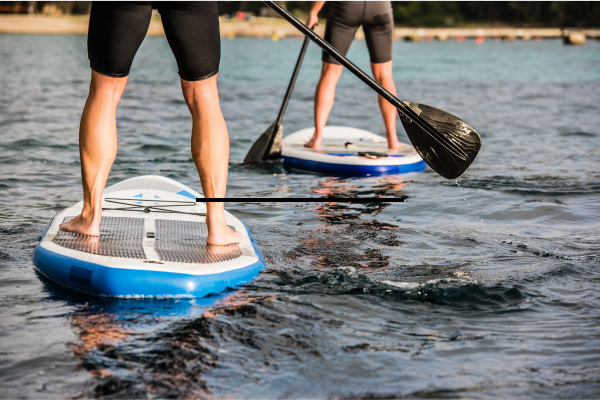
Inside a gym, an instructor controls the floor, the temperature, and the equipment. On the water, a paddleboard instructor manages currents, wind, boat traffic, changing depth, and participants who may not be strong swimmers. A student who loses balance in a studio simply steps off a mat; a paddler who falls off a board lands in open water.
That shift from a contained room to an uncontrolled natural setting is exactly why paddling on water demands a different view of liability. The instruction may be similar, but the consequences of a mishap are far more serious.
The Musculoskeletal and Psychological Effects Instructors Manage on the Paddle Board
SUP is a genuine full-body workout. Research into the effects of SUP points to high levels of aerobic and anaerobic fitness demands, and studies using a continuous graded exercise test confirm its value as a training tool across multiple domains of physical health. Balancing on the board while paddling engages the core, legs, and shoulders continuously.
Those benefits on fitness come with real physical and psychological demands. Instructors manage the musculoskeletal and psychological effects of participation — strains, fatigue, and the stress a nervous first-timer feels on unstable water. While the psychological benefits of SUP are well documented, so is the reality that an instructor is responsible for people performing demanding physical activity in an environment where a small error carries big consequences.
The Water-Based Risks a Standard Fitness Policy Overlooks
A standard fitness policy is written around indoor, land-based instruction. When you move that same instruction onto water, several serious exposures appear that the policy language simply never contemplated.
Drowning, Weather, and Open-Water Exposures
The most obvious and most severe risk is drowning. A participant who panics, cramps, or gets separated from their board faces a life-threatening situation no gym class ever presents. Weather compounds it: wind can push paddlers offshore, storms roll in quickly, and water temperature can trigger cold-shock or hypothermia.
Open water adds still more exposures — strong currents, hidden underwater hazards, boat and jet-ski traffic, and marine life. Each of these can lead to injury or a liability claim, and none of them exists inside the four walls of a studio.
Equipment Risks From the Board and Paddle
The gear itself creates exposure too. A board can strike a participant, a leash can tangle, and a paddle can cause impact injuries during a fall or a crowded launch. If an instructor supplies boards and paddles, they may bear responsibility when a piece of equipment fails or causes harm.
This is a meaningful gap. Standard fitness policies rarely account for watercraft-style equipment, so damage to or caused by a board and paddle can fall outside their coverage entirely.
Where a Standard Fitness Policy Leaves Paddleboard Instructors Exposed
The core problem isn’t that instructors lack insurance — it’s that the wrong insurance creates a false sense of security. A policy built for indoor fitness can leave a paddleboard instructor personally exposed at the exact moment they need protection most.
Why “Land-Based” Coverage Language Creates Dangerous Gaps
Many fitness policies contain language that limits coverage to activities conducted at a fixed, land-based location, and some exclude water-based or aquatic activities outright. When a claim arises from an incident on the water, the insurer can point to that language and deny it.
That’s the dangerous gap. An instructor believes they’re covered because they hold a fitness policy, yet the fine print quietly excludes the very setting they teach in. If something goes wrong on the water and the policy only responds to land-based instruction, the instructor may face legal and medical costs alone.
How the Right Coverage Protects Stand Up Paddle Boarding Instructors
The solution is coverage designed for how and where SUP instruction actually happens. Rather than forcing water-based teaching into a land-based policy, stand up paddle boarding instructors need protection that acknowledges open-water realities.
Matching Your Policy to Real On-Water Risks
The right policy matches the real risks a paddler faces: participant injury and drowning exposures, weather-related incidents, and claims tied to equipment like the board and paddle. It should clearly cover instruction conducted on the water, not just in a studio, and extend to the locations where classes actually take place.
Because SUP falls under the broader fitness and wellness umbrella, working with a provider that understands both fitness instruction and specialty water-based activity matters. To see how coverage can be tailored to paddleboard and other specialized fitness disciplines, explore the options at Dance Studio Insurance, which insures a wide range of dance, fitness, and wellness professionals.
Safety Tips That Reduce Risk on the Water
Strong risk management supports any insurance policy and helps prevent claims in the first place. Instructors can meaningfully reduce on-water risk by building these safety tips into every class:
- Screen participants for swimming ability and health conditions before they get on a board.
- Require personal flotation devices and board leashes for every paddler.
- Check the forecast and cancel or relocate classes in high wind, storms, or unsafe water conditions.
- Teach on calm, familiar water and keep groups small enough to supervise closely.
- Use clear liability waivers and keep incident records for every session.
- Carry a safety plan — a whistle, a means of communication, and a way to reach help fast.
These steps protect participants, strengthen an instructor’s professionalism, and demonstrate the kind of risk awareness that pairs naturally with proper coverage. Insurance handles the financial fallout when something goes wrong; smart safety practices reduce how often that ever happens.